
“The party's over.”
Saving the things we love means facing uncomfortable truths.

Hello, hope you’re well! Slight change of structure with this edition of the newsletter: instead of a bunch of shorter updates, I’m going to focus on a particular topic that’s been dominating my thoughts recently.
If your social feeds are anything like mine, then you might have seen this mildly viral Instagram post from the other week, in which Manchester-based promoters Not Bad For A Girl break down the financial challenges they face putting on parties:
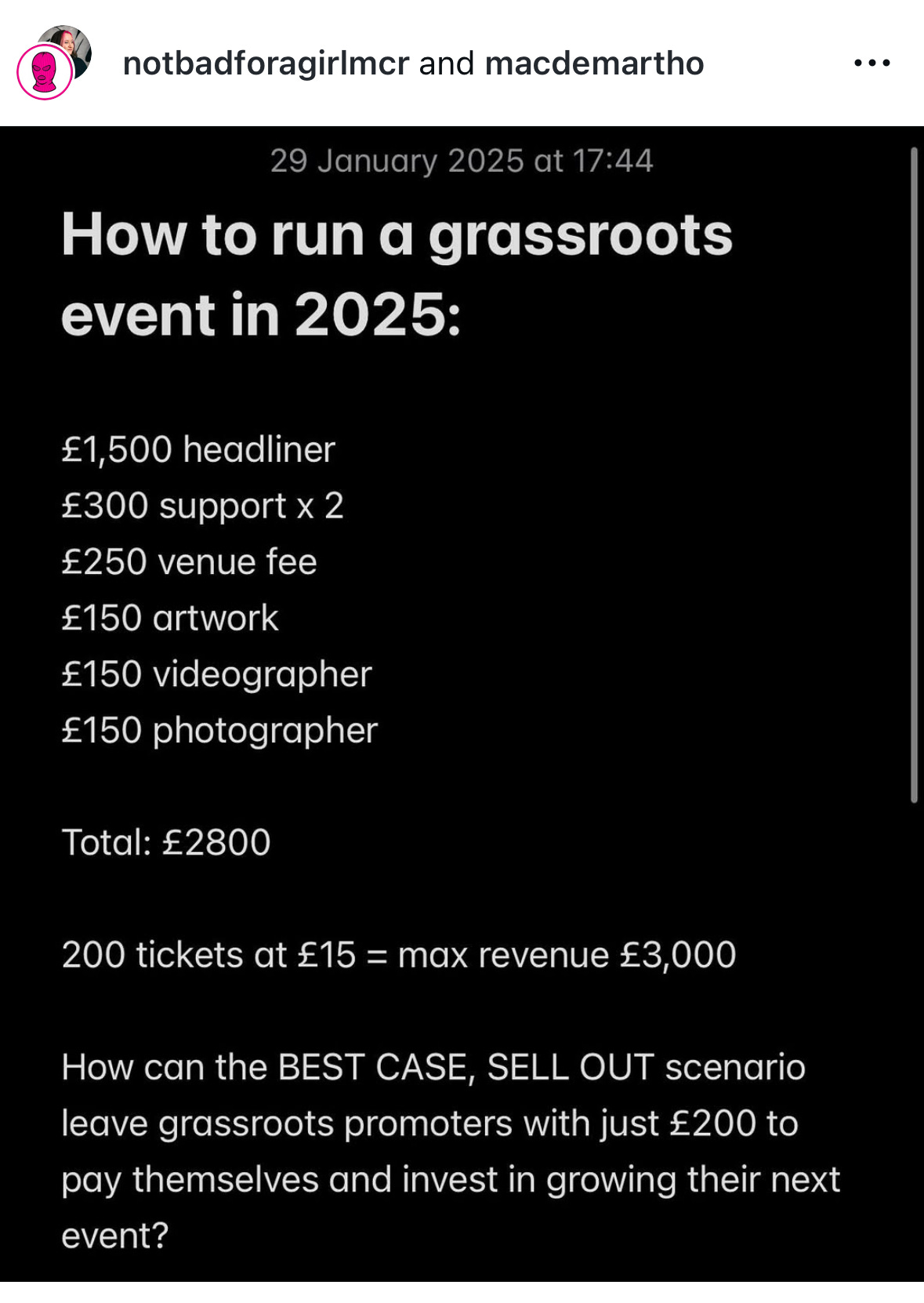
I’m always a fan of people being more transparent about the practical and economic realities of their work, and the diagnosis here is clear and inarguable: the music industry is now so irredeemably broken that even a successful promoter selling out a venue isn’t enough to make the numbers work. This obviously isn’t a new problem, or specific to Not Bad For A Girl, but seeing it laid out in such stark terms is powerful.
Where things get trickier is in our collective reaction to that state of affairs, and the question of what should be done about it.1
There’s a vein of resignation running through a lot of the comments under NBFAG’s post: people adding on the costs of security, backstage riders or the headline DJ’s booking agent fees2, or scoffing at the idea of only paying a photographer £150 for a night’s work. The general theme seems to be: you thought things were bad? Well the reality’s even worse.
Set against this are more optimistic ideas from NBAG and others for fixing things:
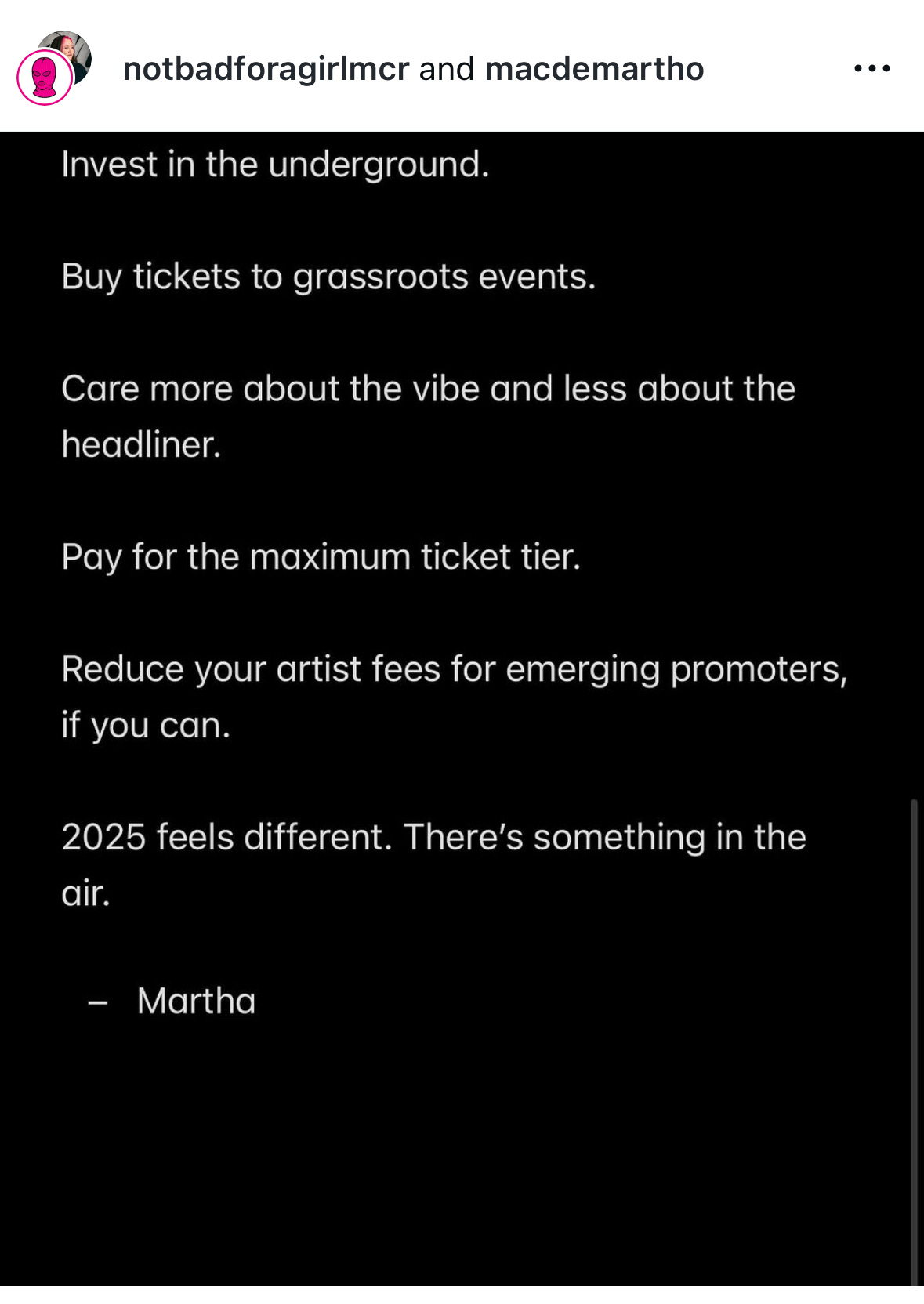
At first glance, this all makes perfect sense: the outlook for promoters is clearly bleak, and if they suffer then everyone else in dance music does too. If minor changes in expectations or behaviour can help us to safeguard our collective financial viability, then of course we should all step up where we can.3
Still, it’s telling that NBFAG’s post is ultimately a list of what other people (primarily DJs and ravers) should be doing, and that their end goal seems to be merely making difficult market conditions marginally more accommodating, rather than more fundamentally rethinking the status quo.
There’s a third category of comments under NBFAG’s post which could be broadly defined as existential: questioning whether the specific business model outlined in their breakdown, with its four-figure DJ fees for tiny venues and endless churn of digital marketing content, is even worth protecting in the first place.
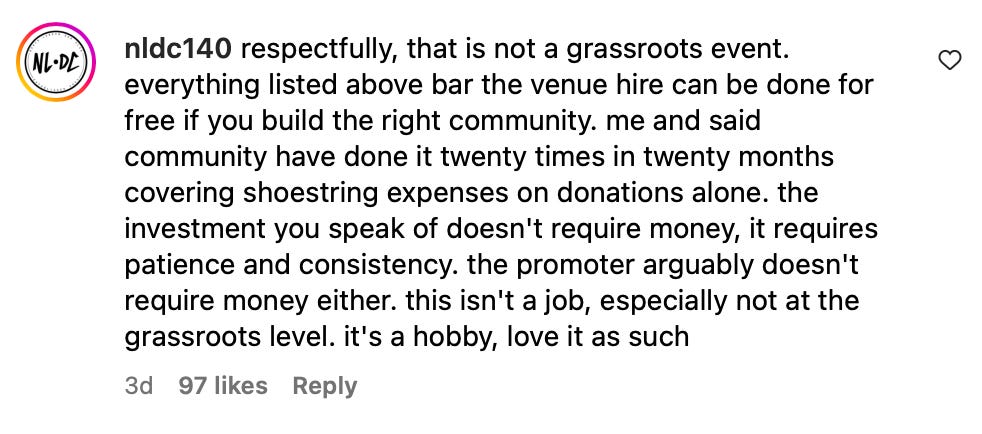
North London Dub Club is a dubstep party in a 100-cap venue that doesn’t charge on the door or pay its DJs, and as such might be seen as something of an economic outlier. I’m not sure that their blanket suggestion to treat event promotion as a hobby is particularly useful advice for someone watching their livelihood disappear, or necessarily helpful for broader cultural diversity4. But I do think there’s something worth acknowledging in their line of thinking.
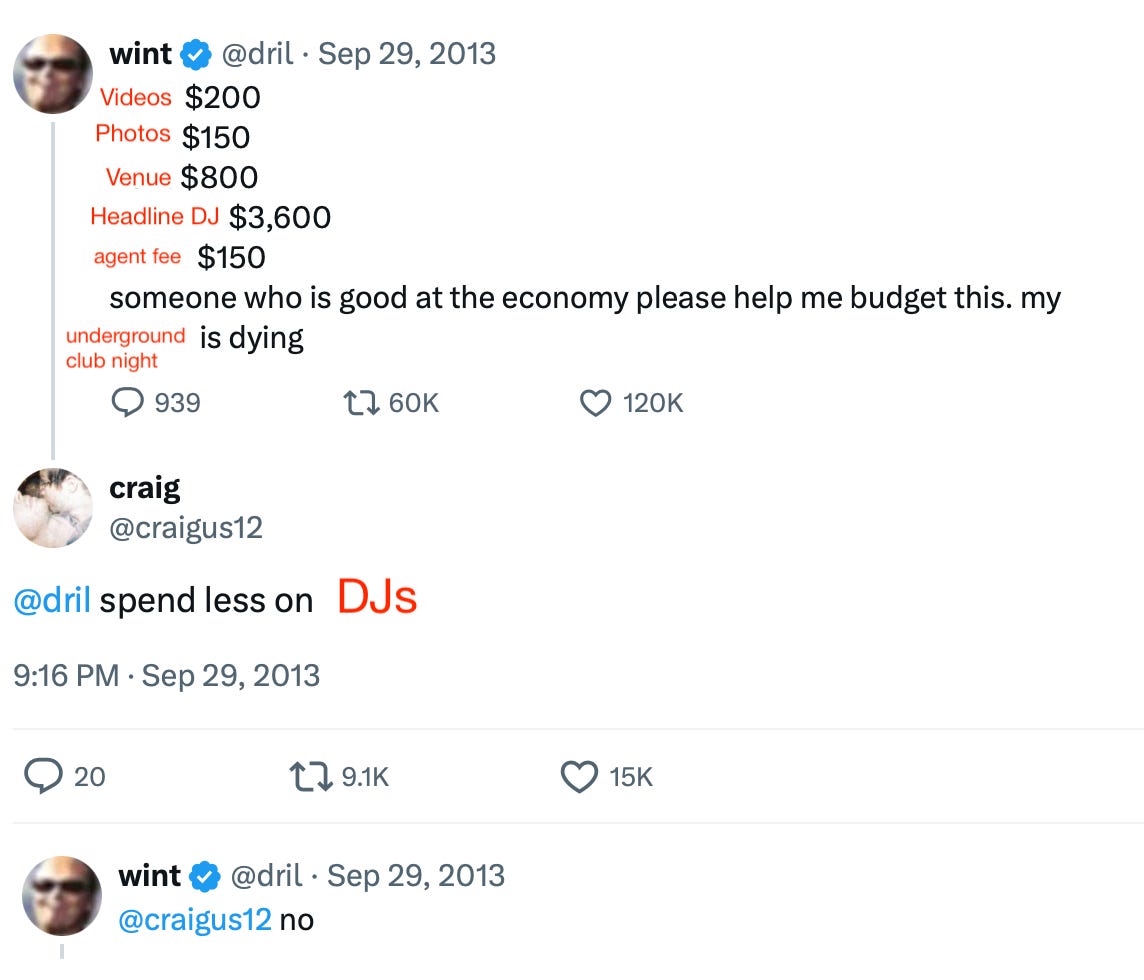
Surely the defining feature of “grassroots” events is not that they’re small, but that they scale organically with the community able to sustain them, each of whom are driven by more than just commercial concerns. If you’re ultimately relying on big names and glossy visuals to stay afloat, then you’ve unwittingly adopted the same economic model as a superclub, just without the financial backing to make it work.
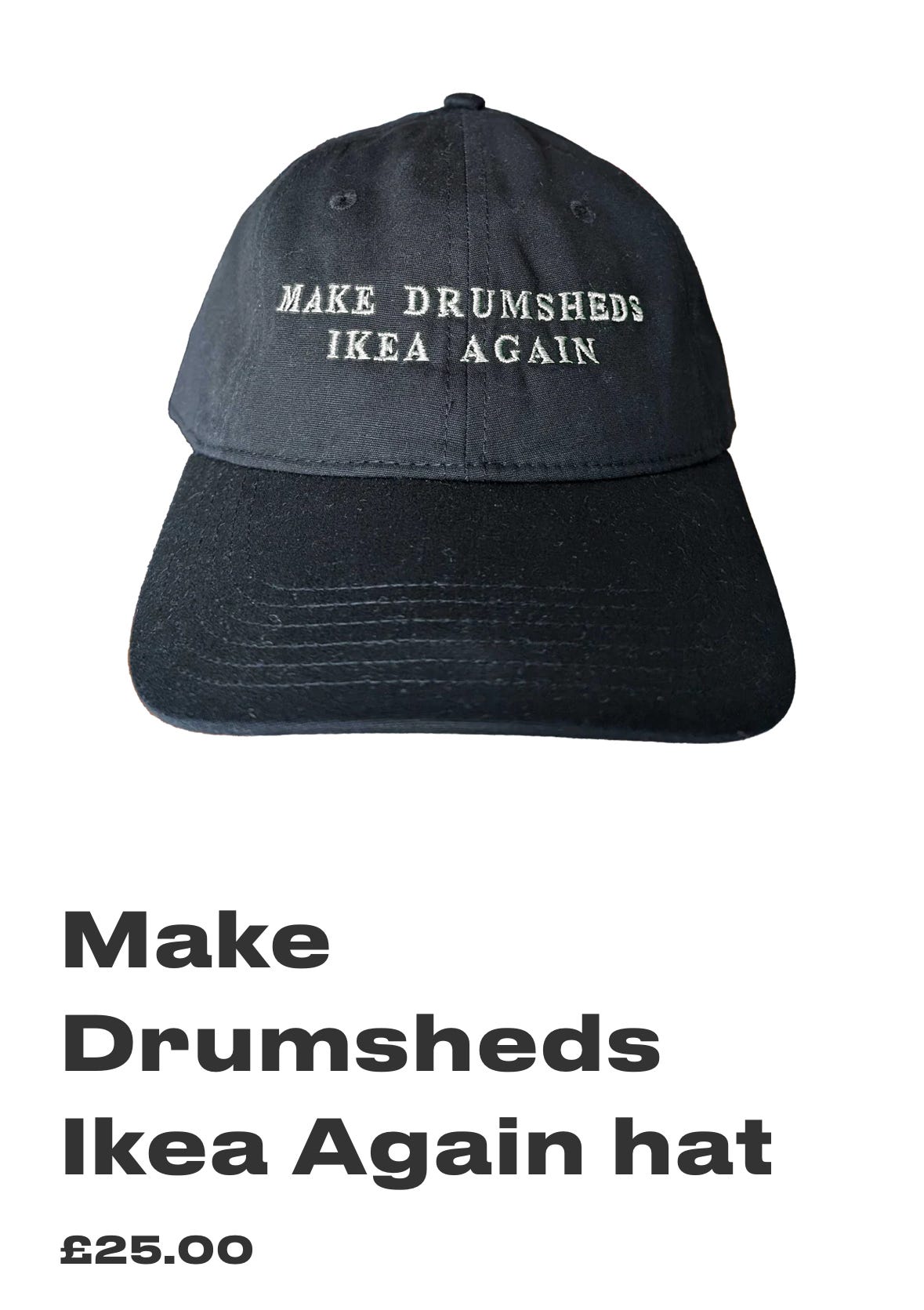
Or, to put it more flippantly:
All of this came suddenly into focus for me with a comment from my housemate Ruaidhri the other day. His view was that this entire debate is meaningless unless we acknowledge the wider context in which it’s taking place: namely, that we’re currently living through the biggest transfer of resources from working people to the hyper-wealthy since the invention of capitalism.
From the fires in LA to the crushingly inevitable prospect of Reform getting into power in the near future, to your favourite promoter being unable to keep the lights on: these are all ultimately just examples of capital exerting itself, a question for which our economic and political system no longer has any meaningful answers. “The party’s over,” was Ruaidhri’s extremely succinct way of putting it.
The first thing this made me think of was “Deep Adaptation” - the 2018 scientific paper in which sustainability professor Jem Bendell argues that climate change is now unavoidable, and will inevitably lead to societal collapse in the short to medium term. Rather than trying to solve this, Bendell says, we should instead be looking to adapt to it: finding resilience in the shared values that will survive climate breakdown, relinquishing the things we can no longer cling to, the restoration of opportunities previously made impossible by the orthodoxies of fossil fuel capitalism, and a reconciliation with each other, making collective peace with the end of the world as we know it.
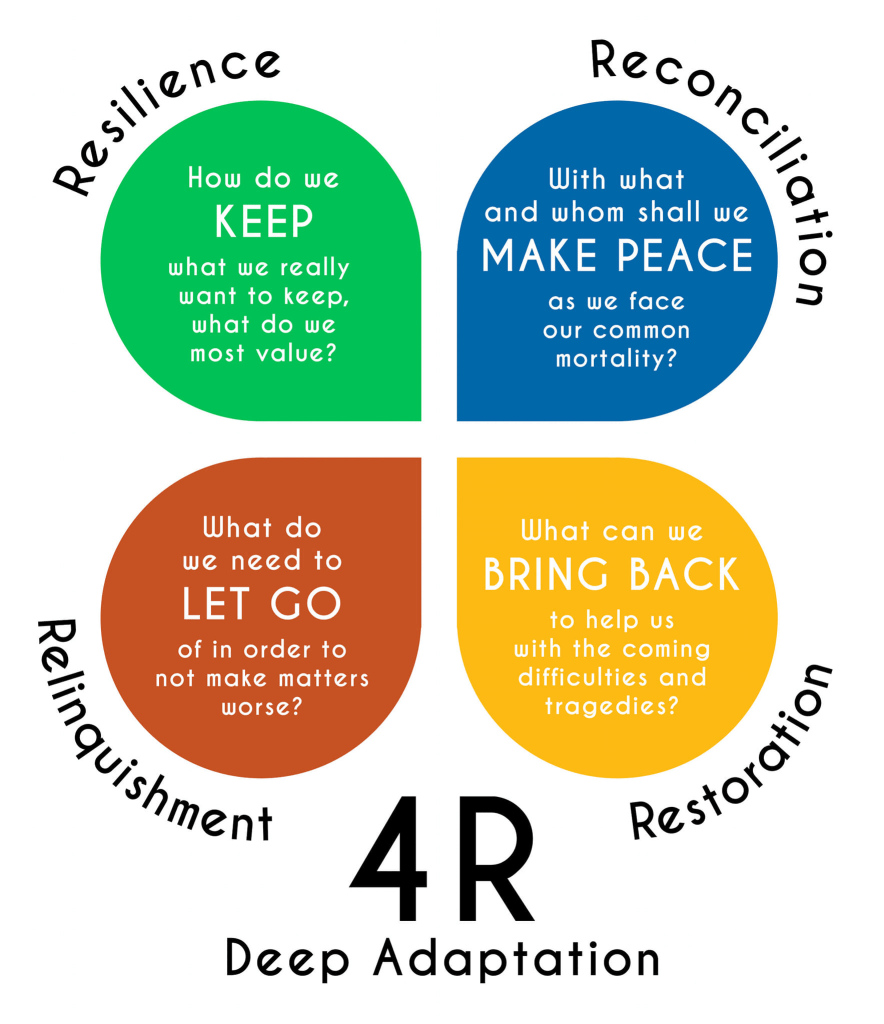
This argument has prompted plenty of debate in a number of different fields, but the core principles feel wholly applicable to the consumption and production of dance music, and indeed culture more widely.
Maybe you’ve sensed it already: the previously busy mid-career DJs whose bookings have dropped off a cliff in the last 12 months; independent venues clinging on at subsistence levels5; the constant stream of festivals being forced to close; promoters who sell out a show but still don’t break even; the ever-increasing difficulty, across all fields, of sustaining an independent creative practice and paying the bills. Maybe you detect it in the compromises demanded by these straitened economic conditions: the grindingly predictable clichés of the DJ industry, the endless algorithmic arms race for attention, the deadening feeling of being on a dancefloor that neither allows you to fully shake off the weight of the world, nor meaningfully engage with it - the very same ennui which made dance music necessary in the first place.
I don’t think this is just age or cynicism on my part: something’s fundamentally broken, even if we can’t quite name it yet. The basic organising principles of club culture have remained largely unchanged since the 1990s, make decreasing sense in a burning world, and yet seemingly still have no meaningful alternative. In the face of all this, we narrow our view for fear of being confronted by the precipice beneath us. Our conversations and criticisms, however well-intentioned, end up missing the bigger point.
This isn’t just a counsel of despair, though. By acknowledging all of this and accepting our reality, we free ourselves to engage honestly with it.
What if dance music took the tenets of Deep Adaptation to heart? What would retaining the essential aspects of the club - a collective sensory experience based around movement and amplified sound - look like, when shorn of all these other transitory concerns? What if we relinquished the idea that club culture necessarily has to involve mid-tier DJs taking seven short-haul flights a week to sustain their careers, or promoters paying £1,500 plus agent fees for someone to perform to 200 people? What restoration becomes possible - in ways we may not even see yet - when we step away from the late-capitalist grind and the algorithmic treadmill? What role could this renewed, reimagined approach to dance music play in the collective reconciliation that awaits us in the near future?
These questions don’t have clear or immediate answers - I’m certainly not going to dictate any - nor do they demand us to unilaterally reject society as it currently exists. People still need to get paid for their labour. Parties should still be fun and messy and impulsive, rather than weighed down by worthiness. Some compromises will be required, some complicity inevitable. We should still support Not Bad For A Girl, and others like them, even if we know deep down that we can’t fix their underlying problems with the tools currently available to us.
That real change requires something scarier, and harder to grasp. It means acknowledging our own fragility and denialism, and confronting the ugly truth that we’re all ultimately fighting over the same dwindling pile of resources. It means many of us accepting and mourning the loss of opportunities and experiences we value: those which currently exist, but which are now impossible to sustain, and those we’ve dreamed of but won’t now see come to pass. Many of the things we love aren’t going to survive. Safeguarding the rest requires brutal honesty.
It will take time for each of us to find our way to this realisation: I can’t pretend I’m entirely there yet myself. But it’s only by fully recognising and accepting the broken system around us that we can attempt to properly reckon with it, and build any kind of genuine hope for the future. Despite all the struggles inherent to that process, I find the thought of it weirdly reassuring.
Thanks for reading! See you next time.
Ed.
Online discourse (dance music-related or otherwise) has always had this tendency: viral posts like this are great for identifying specific, tangible issues, but feel much less convincing when it comes to connecting those problems to a wider context, or fostering collective agreement on how to fix them.
I didn’t realise that these get added to the promoter’s invoice, not taken as a cut from the DJ’s earnings: is this really how it works? If so, it’s the reverse of what happens with basically every other agent relationship I can think of.
This type of thinking isn’t exclusive to promoters, of course: you see exactly the same form of argument deployed by artists, DJs, venues, ravers, or whoever else is under threat, depending on whether the issue threatening them is streaming, dwindling live fees, licensing difficulties or ticket costs.
London’s post-Covid scene is increasingly dominated by promoters with deep pockets, even if they’re coy about the ultimate source of their funding. If we treat everything as a hobby, we merely give the independently wealthy an even greater advantage.
It’s a statistic I find myself coming back to constantly, but according to the Music Venue Trust the average profit margin - the average - for grassroots music venues in the UK is 1%. The physical infrastructure of this country’s non-corporate musical ecosystem is running effectively on a not-for-profit basis. How is that ever going to be made sustainable?